


Luke Winslow-King is a charismatic and engaging Americana guitarist, singer, songwriter, and producer, hailing from Cadillac, Michigan, and currently residing in Spain. His ninth album, Coast of Light, a musically expansive and brilliant collection of songs for him that should broaden his audience, will be released on March 27th. Recently, Luke spoke with us about his musical background, influences, new album, and future plans. The resultant conversation, edited for length and clarity, is below.
Americana Highways: Who do you consider to be your biggest musical influences and why?
Luke Winslow-King: Well, you know, I would go back to my father just being the biggest influence in my childhood by giving me an example of how therapeutic and enjoyable music can be. That was my first inspiration because when my dad got to unwind, he chose music as his vehicle to take him there, you know, so that was like my first influence.
As far as an individual musician or songwriter, I would say I’ve been really inspired by Bob Dylan’s work throughout my life. Through his different phases and different albums, he’s just always kind of circled back and found new ways to inspire me. Outside of that, instrumentally speaking, I would say I’ve been really inspired by the work of Ry Cooder as well.
AH: Can you recall a particular moment when you wanted to be a songwriter, or you wanted to spend your life making music?
LWK: I started playing in bands as a young kid, just kind of like kids in the band room after school, getting together and jamming. I think I was probably 12 years old when I put my first band together, and I just wanted to play electric guitar. And there just came a moment where nobody knew the lyrics, and I had kind of a knack for memorizing lyrics. I listened to a lot of music, trying to learn guitar parts by listening to the records over and over again. So, I just kind of got myself into a position where I was the guy who knew the words, and I could at least carry a tune. That kind of put me in a spot where, in the band, I was singing three or four songs a night. And then I turned 15 and started another band, and everyone just kind of looked at me like I could lead the band. As I got older, I got more and more comfortable in that position. As a band, we wanted to record ourselves playing, so we realized we needed to get some songs together. I went home and started writing lyrics to the music I was playing on my electric guitar. I always just wanted to play guitar for a living. I’ve had to learn to do a lot of things to support my guitar habit, and singing and writing are two of them.
AH: How would you currently describe your songwriting and/or creative process? How do songs come to you?
LWK: Well, I made a decision a long time ago not to force the songs. I try to create an environment where they can come naturally, and I just build a life around being a writer rather than someone who tries to force themselves to write. I would never go on a writing retreat because my whole life is a writing retreat; I don’t need to retreat from life to write. Just turn your life into a writing retreat, and then you’ll always be ready to write.
AH: How did a young singer-songwriter from Cadillac, Michigan, eventually end up living in Spain? And how would you relate that to your musical journey? Or do you consider that just a natural part of your musical journey?
LWK: My life is a musical journey. I’ve been chasing the songs and chasing the music opportunities to be on stage my whole life. I left home at 17 to study jazz and then decided it wasn’t for me. I dropped out of school and hit the road with a bunch of folk musicians playing Woody Guthrie songs, and I eventually found myself in New Orleans.
I started studying classical music because I wanted to hang around in that bustling city, and I also learned a bunch of ragtime and traditional jazz, as well as digging deeper into the Delta blues. While all this was going on, I also started playing on the street in all the clubs in New Orleans. It got pretty damn hot in the summertime there, so I decided to go over to Europe to play on their streets during the summer.
Eventually, I started making it over to Europe every summer because that’s where the best busking spots were – in Amsterdam, in Paris, and in Rome, especially. That’s basically how I first started coming over here to Europe. I started playing a few better gigs and getting agents to represent my band and me. Over time, I started bringing bands from the US to tour with me here. And then of course, I met my wife at a festival in 2016, and we’ve been married for going on three years now.
AH: What is your favorite thing about playing in front of a live audience?
LWK: I guess I’m really not into the element of being in the spotlight or being a cheerleader. But I really do like that feeling of everyone kind of agreeing or everyone kind of revolving around one thought or song at the same time. It’s kind of like you become one organism as you sing in tune together. Everyone’s on the same page for a precious few moments.
That’s what my songwriting has really always been about. It’s like trying to find something universal that people can relate to, and that seems to ring truest when it’s in front of an audience, when everyone’s into it. My favorite moment on stage is when you kind of feel yourself disappear as an artist and do everything effortlessly. The band is running on just oxygen or fumes or whatever it is, and no one’s thinking, and it’s just like the music in the moment is just happening to you. It’s almost like you’re watching a movie or you’re in a dream. It just takes over, and that to me is a blissful place that I’ve been chasing for a long time.
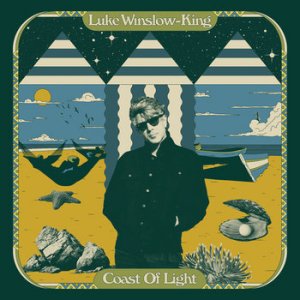

AH: What was the inspiration for your new album coming out on March 27th, titled Coast of Lightt?
LWK: I kind of look at the new album as a collection of souvenirs. They’re all like little time capsules, a representation of a time and place. The main song, ” Coast of Light,” which is also the title track of the album, I came up with on a trip to a place called the Costa de la Luz, which translates literally as “the coast of light.” It is in Andalusia near the town of Cadiz. My wife and I went to visit there, and we just became completely enamored with it. It is just an incredible and beautiful place.
It reminded me a lot of the vibes I really loved about New Orleans when I first discovered it. There are palm trees in front of a cathedral in this, like, fortress town that’s kind of like floating out in the water. And then, right there, are these beautiful beaches along the coast, with ancient ruins rising from the sand. It’s really kind of almost like a psychedelic place, really. My wife and I just had a ball down there, and then the song kind of came to me on the way home, or when I got home, as I was thinking about the trip. So the song “Coast of Light” is like unpacking the trip. It’s like remembering the trip I had and how my wife and I had such a good time. It was sweeter than the chamomile wine we were drinking
I’m always trying to make records, and I’m always trying to write songs. So I kind of took that spirit from that song and made it the main centerpiece of a collection of souvenirs, and I placed the other souvenirs or songs around it. That’s kind of how I tried to treat each song on the record and the album as a whole. And I’ve also been inspired by Spanish art, culture, and the Spanish way of life.
I’m starting to dig into Picasso and Dalí, and just kind of like why they created the art they did. I’m looking at what inspired their creations and what it really means. I’m especially starting to see Dali’s art in this manner. I’m like, okay, there’s this collection of seven different things with this background in this painting, and none of it makes any sense, but it’s about something, in the sense that it means something. It takes you to a place, to a feeling, and makes you look within yourself. It helps you understand why it makes you feel the way you do.
So I guess with all of my songs. including the ones on the new album, I’m always kind of chasing that more transcendental, ethereal ghost that inspires, and I try to put it out there for my listeners to explore within themselves.

AH: You discovered the song on the album “Dangerous Blues” through an Alan Lomax recording, correct?
B: Yes, I’ve always been a big fan of Alan Lomax. I found it online as part of his The American Patchwork series. I found a video of this guy named Joe Savage, who I think is just like a local dude from Mississippi, who I don’t think ever had a music career, just singing the song under a bridge a capella. And then I went back and realized that Alan’s father, John Lomax, had also done a recording of the “Dangerous Blues,” where it originated in a Mississippi prison in the 1930s. It was called a “prison yell” or a “prison call.” It’s not really what you would call singing; it’s kind of more like a holler, you know.
And so the song kind of developed over time, and I tried to just take it to a new place by putting some music behind it. I was really inspired by the vocal recording of Joe Savage I mentioned because it is so visceral and powerful, with so much pain in his voice.
AH: Other than the new album coming out, are there any other future plans that you would like our readers to know about?
LWK: Sure, I will be hitting the road in northern Europe and Italy this month. We’re going around Europe and plan to hit the States this summer and fall as we try to promote the new music. I have also been working more as a producer for other artists, and I have a couple of projects coming out later this year and early next year.
I am also trying to let people know that there’s something really fresh, coming off the presses that they can look out for in the near future as well. We’re collaborating with one of my heroes, Little Freddy King, down in New Orleans, and it’s going to be great.
AH: My last question – When I say the word music, what does that mean to you just off the top of your head?
LWK: Just off the top of my head, I immediately went to my dictionary definition, in that music is a combination of rhythm, harmony, and melody. It’s the blend of those three things.
You can take those three things and expand on them a lot, but for me, it really comes down to the human experience. It’s about people sharing, relating to, and reflecting on different aspects of the human experience and what it’s like to be alive.
Coast of Light (Bloodshot Records) by Luke Winslow-King will be released on March 27th and will be available on his website.
Enjoy some of our previous coverage here: REVIEW: Luke Winslow-King “Coast of Light” and here: Show Review: Luke Winslow-King Gave Blistering Performance at Mercury Lounge