


Hunter Root: Turning Grief Into Grace on Crooked Home
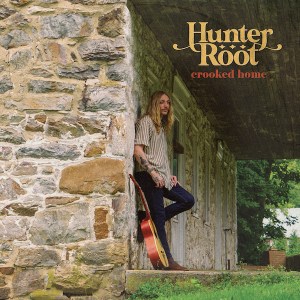

For Pennsylvania musician Hunter Root, the road to his new album Crooked Home—out October 17, 2025—runs straight through the hardest chapters of his life. Written in the shadow of his brother’s death and recorded with producer David Kalmuskey at Nashville’s Addiction Studios, the record is an unflinching portrait of family, pain, and the stubborn beauty of survival.

Its centerpiece, “’94,” may be the most powerful song Root has ever written—a three-minute distillation of grief, memory, and the impossible task of saying goodbye.
“Half the songs ended up being about my brother,” Root said. “I kind of knew the direction from the start. When we first talked about the record, I told my producer about my brother’s death, about what I’d been writing. That set the tone for everything. ‘94’ was almost the album title. It’s the heart of it all.”
Root’s brother Nick, who inspired much of the 2023 album Arkansas, died at 27 after years of battling heroin addiction and a rare cancer called sarcoma. The song “’94” traces that story with stark clarity and love: a young man caught between self-destruction and hope, a family trying to understand how to hold on and let go at once.
“When I posted clips of the song online, people were confused about whether he died of cancer or heroin,” Root said. “And I had to explain—both are true. He was a heroin addict since he was about fifteen. He got sarcoma while he was living in Kensington, Philly—the heroin capital of the country—and he came home to die. I was there for the last six months of his life.”
That time, he says, was both traumatic and strangely redemptive.
“Watching him go through death was brutal, but I’m thankful it happened that way instead of him dying on the street,” Root said. “The odds of him coming home were so slim. So we kind of got lucky. He was doing hospice in our living room. It woke me up. When he died—only eleven months older than me—it felt like a piece of me went with him.”
Root had already been using music to navigate chaos long before grief entered the picture. Raised in a turbulent home where both parents struggled with addiction, he found refuge in the guitar. “There was always arguing and noise,” he said. “I’d just run to my room, grab the guitar, and hide in music. That was my formula for dealing with stuff. It’s a healthy habit I built early, and it’s what’s kept me alive.”
When he began writing Crooked Home, that habit became his lifeline. The record builds on the storytelling of Arkansas but digs deeper into the raw, unfiltered truth of family history—the bruised bonds, the inherited pain, and the small mercies that survive them. “’94,” Root said, is his brother’s memorial in sound.“My brother’s biggest fear was not being remembered,” he said. “So it was obvious what I had to do: remember him through music. I didn’t plan it out, but it became everything.”
In the song, Root pulls from vivid, painful memories: his father’s near suicide before the brothers were born; their childhood in rural Arkansas, where the family lived in a trailer and drove an old Bronco that became a symbol of freedom and loss. “That Bronco was huge for us,” he recalled.
“When my dad sold it after we moved back to Pennsylvania, my brother cried. It’s in the ‘94’ video. All those little pieces of memory—I tried to honor them.”
Nick’s final days found their way into the lyrics, too, including one haunting scene Root still struggles to talk about. “Two weeks before he died, he wanted to go back to Kensington one last time to get high,” Root said. “He was in a wheelchair, and I drove him to the train station. Watching him wheel himself away, looking like a skeleton—it’s burned in my brain. That’s in the song: ‘Deathbed, wheelchair, off he goes, getting high in a tent, because it’s all he knows.’”
When Root first played “’94” live, he realized how deeply it resonated. “It made people cry,” he said. “That’s when I knew—it’s my first truly sad song, intentionally sad. I wasn’t sure how to feel about making people feel that way, but they connected with it. That’s what they want from music, and that’s what I want to give: honesty.”
Root credits his brother not just as inspiration but as the origin of his career. “He started playing guitar first, when he was eight,” Root said. “He’s the reason I play. I wanted to be in a band with him. I wouldn’t be doing any of this if it wasn’t for him.”
Now 30 and based in Columbia, near Lancaster, Root has found a steady rhythm as a touring regional artist. Viral tracks like “Town Rat Heathen” and “Quicksand Sinking” put him on the map, and Crooked Home marks his first label-backed release. Still, the work remains intensely personal. “The label put money into the record, but it’s still just me being me,” he said. “The quality’s higher, but the goal’s the same: to turn pain into something that matters.”
That transformation—of grief into grace, of loss into song—is at the core of everything Hunter Root writes. “My brother was always running from something dark,” he said. “I’m just trying to face it head-on through music. That’s how I keep him alive. That’s how I keep myself alive.”
Find more information here on his website: https://www.hunterroot.com
For story ideas and suggestions, Brian D’Ambrosio may be reached at dambrosiobrian@hotmail.com