


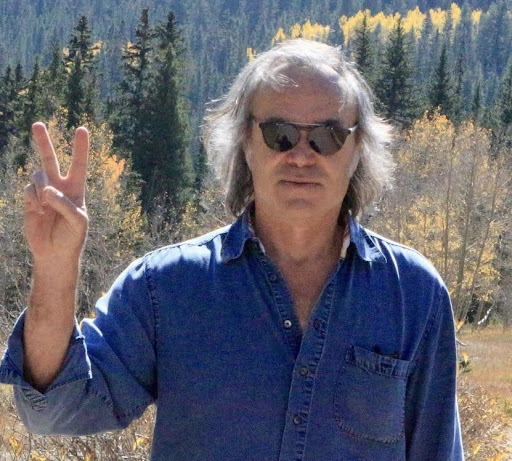
Charlie Winton: Books to Music
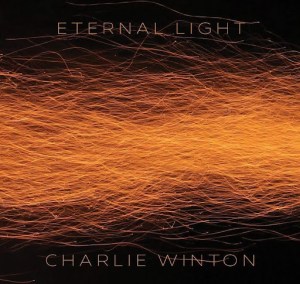
Charlie Winton has a recently released album Eternal Light that is still freshly making it way around the music scene. Eternal Light was produced by Scott Mathews (The Beach Boys, Bonnie Raitt, Ringo Starr) and recorded in his Tiki Town studio in Mill Valley California. Rich with bright sounds, big energy, and quality heartland rock style vibes, Charlie’s lyrics are pieces of confessional poetry.
In order to provide a little historic background on Charlie’s life, Americana Highways presents this reprinted interview by Jack Boulware, which previously appeared on Substack, and has been edited here for length.

by JACK BOULWARE
I’ve known Charlie Winton from afar for many years. But not until we sat for an interview, did I realize what an incredible story he’s lived. Here’s the short version: Charlie Winton retired in 2016 after 40 years in the book business, as CEO of Publishers Group West/Avalon Publishing and finally, Counterpoint Press. He now writes and records his own music.
Americana Highways: So, in 2016 you retired from PGW, from Avalon, from everything.
Charlie Winton: Well, yeah. PGW was sold in 2002, and Avalon was sold in 2007. Counterpoint my final publishing endeavor was sold in 2016.
AH: The moment you signed the paper, what did you do?
CW: The reality was it took about eight or nine months of wind-down. But focusing on my music was what I really wanted to do.
AH: You worked in publishing for 40 years, shipping books around the U.S., throwing parties, publishing books, dealing with authors, with bookstores, with employees, all that stuff. And suddenly it just stopped.
CW: Once I worked through it, it was like this huge relief. I’m kind of free. I mean Counterpoint did occupy an interesting space in my life. Two wonderful gentlemen and true literary icons, Gary Snyder, Wendell Berry were our core authors and partners in the company. Also, I edited and published three of my favorite books there, Bobby Keys’ Every Nights a Saturday Night, Joel Selvin’s Here Comes the Night and Dennis McNalley’s On Highway 61.
AH: I think for anybody who loves the engagement of things, it’s like okay, am I still going to be engaged?
CW: You’re kind of losing your connections. How much of your connectivity, or your pertinence to the world, is connected to work? I did have a couple of interesting projects that I edited after the sale: Stuart Wexler’s Killing King and Joel Selvin’s Hollywood Eden, both in my wheelhouse, and working on them was a nice positive in terms of making the transition.
AH: At the height of it, you were talking, working, interacting with 100 people a day. And suddenly, you were interacting with…your wife?
CW: And our cats. And my guitar. [laughter]
AH: Very different way to go about your day.
But as I hoped, I really did have more time to focus on music. And by the summer of 2017, I had reconnected with this old friend, Dave Eakin. He said, come down to Monterey, and we’ll have a music weekend. My wife, Barbara plays piano so she would join in. Anyway, I sent him a bunch of covers, here’s 15 songs I can sing. Dylan, Stones, old-timey stuff. We did that for a couple hours, and he was like, “That song you wrote we played when you were down here last year? Let’s play that one.” It was like okay, cool. “Do you have any more?” I was like, hell yeah, I have a lot more. We played my tunes for the rest of the weekend.
And for me, that was this moment of reaffirming my path.
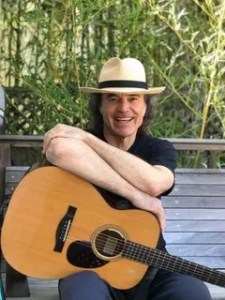
Next couple of years I started these jam sessions with different friends where we would play my originals. Almost kind of like a workshop situation, which really gave me a chance to explore all the songs I had written and was now writing.

AH: Why didn’t you do that before?
CW: You know, it was sort of one of those things. So much business. If you think, by the end of the ‘90s we had about 500 employees in PGW and Avalon combined as well as about a half dozen different offices all over the US and Canada. A whole lot of moving parts.
Throughout the years, with a variety of characters we had informal jam sessions in the warehouse or at the office all the time. But in those situations what I’m not doing is, “Hey, I’m the boss so let’s play my songs!”
So, after leaving publishing, in these later workshop/jam sessions the focus was on playing my originals in the context of just having fun. In any case, after a couple of years of that, I wanted to see where it might lead. I talked to Joel Selvin and he connected me with Scott Mathews. And he was the perfect person at the perfect time.
AH: Scott Mathews has quite a history in the music industry. His credits are insane. He’s worked with: The Beach Boys, Rosanne Cash, Eric Clapton, Elvis Costello, The Durocs, John Lee Hooker, Booker T. Jones, Nick Lowe, Van Morrison, Jack Nitzsche, Roy Orbison, Bonnie Raitt, Keith Richards, Barbra Streisand, and Neil Young. And now he’s producing you.
CW: For sure, the reason I went to Scott is that I wanted to see what my songs would sound like with fuller instrumentation and formal recording. As I said, once I was able to focus on the music, and start playing regularly, I really began to believe there was something there. The bonus was the personal connection.
AH: So, you’ve done three albums with him. It’s very intuitive how he adds the music around what you’re doing. Rock & roll but different styles. To anyone who knows you, it’s your singing voice that really leaps out.
CW: I always sang in that voice, but I didn’t know if it was too rough. And Scott was like, “No, that’s your voice. I believe that guy.”
AH: It’s very believable, very authentic. And the lyrics you write are very literate. Big themes of desire, love, human connection. Were all these tunes written after your retirement?
CW: Well, I have been writing songs for 40 years, but a majority of the tunes we have on the albums were written after 2016. But a couple of the songs on the 2nd album were written in the early ‘80s. About six or seven of the recorded tracks were written 10-20 years ago. One of the things that’s been interesting for me, is to see how nicely my older tunes have held up through the recording process. The 2nd and 3rd album each have a little bit of an underlying theme and it’s been cool to see how the songs written in different phases of my life have fit together.
AH: Thinking in the context of your previous roles do you approach your music from an editor or publisher brain? Say are you looking at your songs and thinking, on track 7, maybe I could take another pass?
CW: Well during the sessions and while mixing we’re very focused on trying to get each song to be fully realized. Kind of similar to the focus you bring when editing a book. But with music, as opposed to words, it’s not as precisely quantifiable. You know it when you hear it. Scott and I have a great rapport. When we begin the process, with each song, we set a general direction based on the lyrics, the theme of the song, and then talk through what could be the corresponding sonic feel. But we always left room for inspiration and surprise. With the three albums, I’m really happy with the final recordings. I think we grew on each album and for me the songs on each stand up well to what I was hoping for.
In terms of my creative process, it always seems to start with the music and then the lyrics. By nature, the initial riff or piece of music sort of just happens. Most likely that music will become the music underlying the verse. Then usually I’ll need to write a complimentary piece of music, for the chorus or the bridge or both. With the lyrics, sometimes they come faster, almost right along with the initial riff, but sometimes slower, for sure. Sometimes I’ll write one verse and then take a while to finish the rest. I always self-edit, and I pick at things word by word.
AH: In terms of the publisher role, are you thinking how am I going to market this?
CW: Sure, sort of. But what does one do, if you’re me? I mean, you have to be realistic in terms of the music business. How do you advocate for yourself, within reason, without being stupid, or silly about it? I had no plan for the first album at all. I just wanted to record the songs. We played the final mix for Joel, and he was encouraging. Joel sent it to Brian Rohan, who was also very encouraging. Brian was like “What do you want to do? Do you want to try to get a contract?” Probably not realistic. The album’s release date was March 2020 and Covid happened and so that was that.
AH: “So, what’s your five-year plan?
CW: Yeah, exactly. That was always a funny question. I don’t know, I wanted to record the songs. The whole process, in some weird way, has such an echo from the publishing business. It’s different, but also there are lots of similarities, not only in terms of the storytelling, but the product itself.
AH: People in the publishing world have said to me, hey, have you heard Charlie’s music? It’s good! Like, we’re not expecting you to have a voice like that. What about performing it live?
CW: I think about it. Scott said, “I could put a band together for you, they’d probably be younger musicians who just want to play.” And that just seemed—I don’t know, didn’t feel genuine to me, and authentic, organic. But I hear you, and many people have said that to me. Somebody said, “You gotta be able to play if somebody offers.” So, yeah. I’m trying to navigate that aspect of this as someone in their ‘70s. If I’m going to follow that path, it has to feel natural.
Not forced.
The first week in the studio we were joking around, and Scott said are you thinking about a stage name?
Hadn’t really considered. I came back the next day and I said you know, the least shameful thing I can do is just be myself.
AH: What do your kids think about this?
CW: They are into it, very supportive. Great taste obviously. Both have creative careers, Jack’s a film editor, Kelly is a designer. Jack plays guitar so he and I play together. Kelly works in publishing, designing book covers, she designed all the albums.
AH: I remember at literary events; you would often have a side conversation with your author. An extra sort of interaction, pep talk, career advice. So, now you’re on the other side. Who’s doing that for you? Who’s saying, Hey Charlie, keep doing what you’re doing?
CW: Well, Barbara is obviously huge in terms of support. She knows my songs and provides great critical input and we’re able to play the songs together. She’s particularly helpful with new tunes and lyrics. Joel Selvin is a great supporter. Scott is obviously key. He provides that positive perspective that you’re talking about. And now I’m the “artist.”
AH: You are the artist. “Please don’t make direct eye contact with Charlie.”
CW: [laughter] Scott always says. “Oh, you’re the artist. What does the artist want?”
AH: “Mr. Winton, what do you require backstage?”
CW: Metamucil!
For the original interview and more, click here: https://jackboulware.substack.com/
Find more details here on Charlie Winton’s website: https://www.charliewintonmusic.com
Enjoy our review of Charlie’s album here: Bentley’s Bandstand: February 2024