


Madeline Hawthorne photo by Dan Bradner
Madeline Hawthorne Brings Open Spaces and Personal Time To Tales From Late Nights & Long Drives
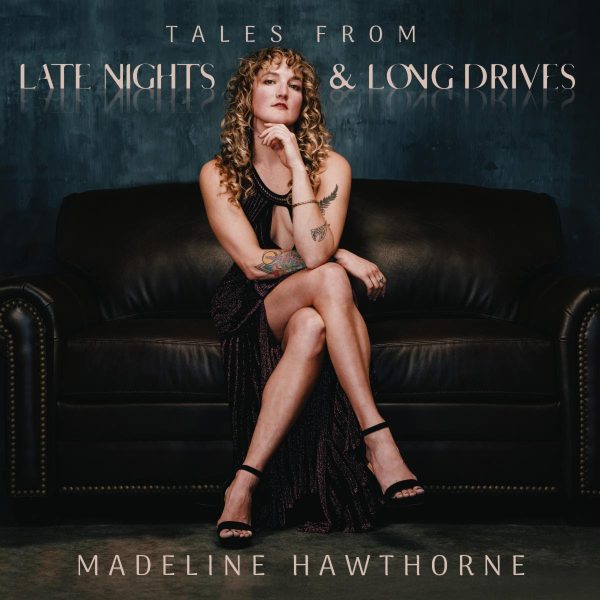
Montana-based solo artist Madeline Hawthorne released her second studio album, Tales from Late Nights & Long Drives in mid-June, capturing the ethos of her return to touring following the pandemic period. Taking in vast swaths of Montana, California, and the Pacific Northwest on drives to play shows, that meditative quality and the awe-inspiring sights helped shape the storytelling on the album gleaned from her own experiences and those of friends.
Having written the songs, Hawthorne found herself able to work at short notice with producer Ryan Hadlock (Zach Bryan, The Lumineers, Vance Joy) at his Bear Creek Studios near Seattle and jumped at the chance. While the approach to the album was driven by acoustic guitar and vocals, Hawthorne also found the remarkable quiet and beauty of the remote Pacific Northwest location creeping into the vibe of the songs, bringing that extra sense of spaciousness and reflection. I spoke with Madeline Hawthorne about the experience of recording at Bear Creek, driving as a meditative activity, and what she focuses on most in her live performances.
Americana Highways: I see from online posts that you enjoy being in the outdoors. Does that help you with keeping up a creative life?
Madeline Hawthorne: We were camping this past weekend, and you have to get it in while you can. In Montana, it’s been in the 70s, and that’s the first time in a while. When it’s warm, it’s time to get outside! I’m going to be traveling a bunch touring, so when I’m home I do this as much as I can. It’s definitely part of my mental health care routine, running around outside. It’s important to me.
AH: Do you try to totally disconnect from songwriting and work when you spend time outside?
MH: Most of the time, if I go for a trail run, I’m not putting music on, and with that rhythm, actually song idea might pop into my head at that time. Or if I’m cycling uphill and find that rhythm. Or if I finish something like that, and my endorphins are going, a song will come. Actually, I think it helps inspire creativity for me. Getting my body moving helps my brain be more active and approach ideas differently. It makes me more open to a melody or a song idea. For me, they often go hand-in-hand.
AH: For this album, you worked with Ryan Hadlock and recorded up near Seattle. Is that where Bear Creek is located?
MH: Yes. It’s the coolest studio I’ve ever worked in and one of the coolest I’ve ever been to. It’s out on ten acres of land, and it’s a barn that his parents purchased in the 70s. They turned it into a studio, so there are pictures of Lionel Richie and a bunch of old polaroids of Dave Grohl, Soundgarden. There are a bunch of artefacts and old instruments, so it feel eclectic and creative, but also like a family summer camp. They also have top-of-the line equipment and even bunk rooms, so I slept there. Ryan has a separate home with his family, but I slept there for ten days, and the only time I left was to go for runs. It was an intensive ten-day process, all focused on the material, and then I’d go out and run through the beautiful woods of the Pacific Northwest. It was an awesome experience.
AH: That’s amazing. That sounds almost like a “destination” studio where you get to be in the natural world.
MH: I think the space totally inspired the vibe on that record. The songs were written, but how we arranged it was influenced by it. I did my vocal overdubs on the last day, when the band had left and it was just me. I think the vibe of the space and the ten days that I’d spent there in the space and outdoors is present in how the record sounds.
AH: I had heard that this album had an overarching idea of travel and being out of your normal environment, which the title suggests, and that really fits. But I also see how this is an anthology where each song has its own story.
MH: Totally. Most of the songs are inspired by my own travels, and if not, are inspired by stories from friends of mine. It’s funny because I didn’t mean for that to happen, but that was what was happening in my life. Some of those songs come from just starting to get out and tour again after the pandemic, and a lot of them come just me, driving alone around Montana, Colorado, and the Pacific Northwest. That was just some really spiritual time driving long distances between venues.
The landscape was so inspiring, and it’s also hard to do. It’s tiring and can be draining on your body and your soul. The album pulls in a lot of emotions that I experienced, trying to go out and do this thing. But I also think that anybody who just wants to get in a car and drive for the pure joy of it, or finds themself on a journey, can relate to those emotions that come up when you’re on the road to something new.
AH: There’s something that’s so American and part of the American identity in being able to just drive for long periods and arrive somewhere relatively unknown.
MH: It’s so true. It’s something that we really value. We drive a lot of cars, and there are environmental issues there, but I think there’s something ingrained in us, that we want to drive these American highways.
AH: In contrast to that, it’s less common to travel big distances alone. I’m someone who does that occasionally, and I think there’s some value in it. You do get that alone time in that landscape.
MH: It can be very meditative, I think. It’s an opportunity to work through whatever you need to work through without the distractions of home. To me, it’s very calming to wake up in one place and the only thing that you need to do is get to the next spot. There’s something about that simple repetition that opens my mind to new ideas. It’s a different state of mind on the road.
AH: When you were up at Bear Creek with Ryan, did you talk about the sound you wanted for the album, or was it a more intuitive thing after he’d heard some demos?
MH: It was a little bit of both. I had this opportunity to record with him because another band had cancelled, so it came up quickly. I had only two weeks! But I was all-in. If the universe provides you with an opportunity, you go for it. When I met him for the first time, he said, “We haven’t had a lot of time to talk about a vision.” But he really liked the songs, and the demos, and the thing he pushed the most was that he wanted my acoustic guitar, and my voice, to be the real driver of the songs, and the way that I played my acoustic guitar. He wanted the band to follow my rhythm and energy.
For some reason, I was really surprised at that. Nobody’s calling me to sit in on guitar! I just thought it was really cool that he wanted that the way I wrote the song to inspire the rest of the way that it was arranged. I really like how that turned out. From there, the musicians on the album are some badass dudes and they had a blast in that studio. Ryan had some really cool, old guitars, and they were walking around, saying, “Can I play this??” He would always say, “Yes, go for it!” Ryan did a great job keeping us on track, while still being open to a few ideas here and there. I think you’ll hear both those things on the record.
AH: I’m sure there was plenty of hustle involved for a ten-day period.
MH: Oh yes, but that’s how you get it done! I’m not one to sit on a record, either. I like to get a project done so I can be open to the next project.
AH: For a lot of people, the second record is the one where they try to solidify their sound in some ways, or even their musical identity. I do get the sense that was on your mind for some of these songs. How do you feel about the portrait of yourself captured by this album?
MH: To me, this album really felt like a sequel. Even though some of the songs are not a journal entry, and I stepped out of writing songs just about my own experiences for this record, but I have thought about it as the 11 different songs on this album being 11 different versions of me. That’s based on the choices that I’ve made, and knowing that if I’d made different choices in life, I might have wound up being one of the other characters in some of my songs. I’ve had different studio musicians for each record, and I think that has changed the way each record sounds. I think my songwriting style and the vocals on this album are solidifying a vibe and style for myself. That could completely change on the next record, since I have no idea what that’s going to sound like, though.

AH: There are different sound possibilities among these different songs, too, which leaves doors open. The song “Typical Love” sounds like a blues rock song to me, and I was thinking, “Oh, she could do a whole album like that.” Then you’ve got the reflective quality of “Where Did I Go Wrong” which is a more singer/songwriter direction. It’s definitely a broad album.
MH: I could sit down and say, “I’m going to write a blues rock album.” Or I could say, “I’m going to do an acoustic album.” That could be a really fun opportunity down the road. At this point, I’m writing when the inspiration comes and that’s the only way I’ve done it up to now.

AH: How does all this relate to your live shows? Do you play mainly original songs?
MH: We play originals, and a mix of blues, country, and rock covers. The show is pretty high-energy. It’s rocking and fun. My band from Denver is super tight and really fun. They are great at jamming if we want to go wild and let loose. We have primarily been sticking to California, the Pacific Northwest, and the Rockies, but hopefully I can make it further east.
AH: I know that you’ve been recently doing support slots. When you’re supporting someone, are you choosing songs mainly based on the venue and the situation, trying to get that energy up?
MH: I’ve opened for John Craigie, for example, who’s a wonderful storyteller who’s a bit more mellow, so I’ve done a mixture. I do try to play to the room. I do generally try to get the energy up if I’m supporting another artist, but if I’m opening for John, I feel like I can get a little bit more intimate than if I’m opening for a full-fledged rock band. It can change a little depending on the environment we’re in.
AH: Do you also play alone in smaller venues? In that situation, what sort of songs do you choose?
MH: Oh, yes. Man, it’s fun. Making a setlist for me is like making a mixtape or a mix CD for a friend. I think about the order and flow. It’s about the energy flow, but it’s also about what I’m trying to say. I do talk a lot during my sets, and I love to tell stories. I tell stories about Montana and how this space has inspired some of my songs. I talk about my trips down the river, and I feel a connection that way.
I always go to my merch table when I’m done to meet people. I get so many folks that come up and share their stories from when they went to Montana 20 years ago. They talk about how much the place meant to them.
There are other times when I pick songs based on what has happened that day on the road. I think, “I need to play these songs because I need to sing these words right now.” If I had a tough day, I want to sing a song about struggles. Or, I’m going to sing a sassy-ass number, and I’m going to sing it really loud, so I can drown out that little voice in my head telling me, “Give up and go home.” It changes all the time, but for the most part, I’d say it’s about smiling, and being goofy, and letting loose, and being free enough on stage to encourage and make other people feel like they can do the same.
Thanks very much for chatting with us, Madeline Hawthorne! Discover more at her website here: https://www.madelinehawthorne.com/
Enjoy our previous coverage of the album here: REVIEW: Madeline Hawthorne “Tales From Late Nights & Long Drives”