


Jerry Garcia exhibit photos by Shana Leigh photos
The Bluegrass Museum’s Carly Smith Guides Us Through “Jerry Garcia: A Bluegrass Journey.”
The Bluegrass Music Hall of Fame & Museum is located in Owensboro, Kentucky, and on March 28th through March 30th, 2024, they hosted an extraordinary long weekend of events in celebration of the opening of their exhibit, “Jerry Garcia: A Bluegrass Journey.” Years in the making, the exhibit is wide-ranging and multi-media, bringing in instruments and artefacts from Jerry Garcia’s life and times, as well as gathering and presenting brand-new interviews with family, friends, and all-star fans who have been influenced by Garcia’s legacy. On top of the exhibit itself, which will remain open for two years, the weekend’s launch events include panels discussions with Garcia’s family members, musicians, and scholars, as well as live musical events featuring guests like Leftover Salmon as their house band, which make for a memorable experience.
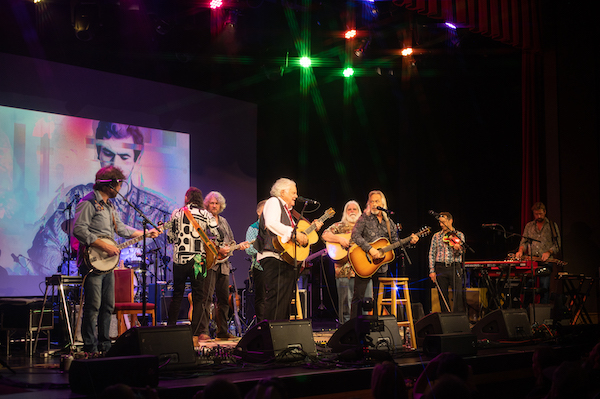
Traditional bluegrass fans will find plenty of new evidence and detail regarding Jerry Garcia’s passionate commitment to bluegrass, and for those who are fans of The Grateful Dead, the exhibition is a gateway to learning more about bluegrass and also more about Garcia’s creative life. I spoke with the museum’s curator, Carly Smith, about the growth and development of the exhibition and why it was a passion project for her as well as for so many others.
Americana Highways: Planning for this event and exhibition must go back several years for you all. How did it get started?
Carly Smith: It was actually in 2019. Doing something about Garcia’s connection to bluegrass has always been something that we’ve talked about internally. I’ve been with the museum since 2011 and we were in a much smaller location then. We opened a new 15 million dollar facility in 2018 and we had two temporary galleries that were ready for a major exhibit. So we started planning on this in 2019, but the pandemic side-tracked that until 2021.
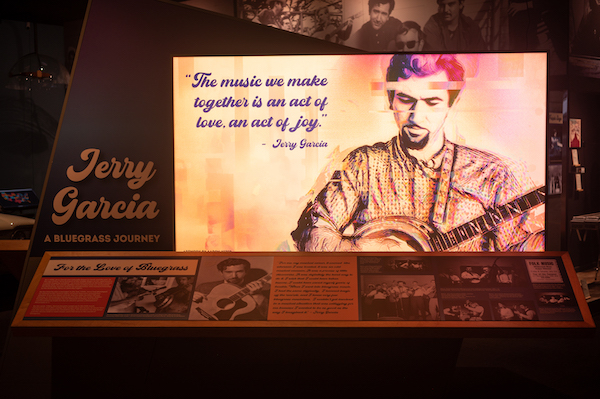
AH: Something that really impressed me was finding out that the museum had done original research for this exhibition by way of gathering new interviews. That’s new documentation for us to have.
CS: Yes, absolutely. We were so fortunate that everyone was willing to participate. I think it was about building a relationship, not only with his family, but with other artists who he played with. That led to an even better exhibition, in my opinion, through the loans of instruments and other items. But the footage alone is hours, and hours, that we captured. We flew to the Bay Area, initially, to capture interviews. Then, we ended up going to the Seattle area, traveling south through Oregon, and getting some interviews there. We ended up in San Francisco again and collected artefacts along the way.
AH: I’m sure plenty of this was affected by real-world factors like who was available, who was not on tour at that time, the state of instruments and artefacts and whether they could travel. Was this just a whole process of constantly winnowing down the possibilities?
CS: It is. It starts with identifying who’s willing to work with us, then finding out what they have in their collection that they are willing to share with us. Because this story goes back to the late 50s and early 60s, it is a lot of tracking of what works within the exhibit and what helps us tell the story.
AH: Someone who visits and looks at the exhibit not immediately think about this, but no doubt trying to decide how to present as much information in an accessible way must have been a big job for you. Were you someone involved in deciding how to present information in that space?
CS: Yes, that primarily falls under my direction. It’s interesting for me, personally, because I was asked what my reaction was to the music of The Grateful Dead once I dug into the project. I kind of laughed because I was stealing my brother’s cassette tapes in the early 90s of Skeletons from the Closet and American Beauty. I’ve been a huge fan of this music from my childhood, then I discovered bluegrass much later. It’s very much a personal passion-project for me to do this, but also to connect it all.
I had to keep reminding myself that not every person who tours the exhibit will be a devoted Deadhead. Not every person will be a major scholar of Garcia’s. Most of our visitors are bluegrass fans. I came to the conclusion that I’m navigating between two worlds, bluegrass fans and fans of Jerry Garcia, and there are so many connecting points that even I did not know. Over the course of two years, really digging into this, I found that he really never stepped away from bluegrass or the banjo.
https://youtube.com/watch?v=lNYeOwHtnEc%3Fsi%3DCqfGMLvD1Mp21flb
AH: I saw in your trailer video that his former wife was saying that when Jerry would come home from Grateful Dead tours, he would immediately grab the banjo. It was like a hidden life behind the public life.
CS: That’s what I keep hearing, over and over. I’m editing some final video clips for the exhibit, and Mountain Girl, Carolyn Garcia, goes even further into that. He was playing the banjo every day. It seems like it was almost a grounding point for him and I think a lot of people will be really interested to see how much he loved playing the banjo.

AH: I did get the sense that it was almost a meditative thing for him.
CS: Exactly. Banjo’s a very technical instrument and even at the very early stages of doing this exhibition it became clear that this wasn’t just a casual thing for him. He was a really good bajo player and you don’t get to that level unless you’re constantly practicing.
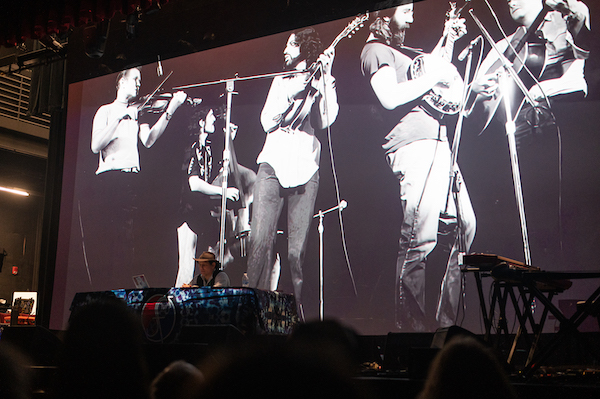
AH: I’ve gotten the impression from that documentary series, Long Strange Trip, which you all will be screening partly at the opening, that for a period of time it was his entire world, and his personal obsession. It clearly did something for his later musical development. He also went on this trip, right, to meet some of his heroes?
CS: Yes. It’s funny because his first wife mentions that unless he was able to play his banjo for at least four hours a day, he’d get into a funk! It was a meditative thing. To my ear, you can hear why he sounds so unique in his guitar playing because there’s a banjo in his background. There’s a bounce to it that I think comes from his work with the banjo. The trip story is fascinating. We interviewed Sandy Rothman, who was on that trip with him. There wasn’t a huge bluegrass scene on the West Coast. At that time, Bluegrass was considered more of a regional music, and that was on the East Coast, where there were hotbeds.
The trip was fascinating, since he left with Sandy in 1964, as a new husband with a new daughter, but that was part of the quest to seek out Bill Monroe. It was a really important trip. He met David Grisman at a jam, at a bluegrass festival. He got to hear the Grand Ole Opry. I think the trip was really that they had to go to the source. I thought, “How cool would it be to have a car in the exhibit space?” The car itself was so tied to the story; it was a 1961 Corvair. This has happened so many times when planning this exhibit that something worked out like this.
We researched online for several months, looking for this car, with no luck. Then, one day I happened to be out with my contractor and said, “Let’s just go to a couple junk yards and see what they have.” The second one that we went to, they had closed the year prior, but the contractor went to see inside because the doors looked open. He came out with a guys in coveralls and said, “You’re not going to believe this.” They had crushed over 2000 cars, but when he opened the gate, there were two Corvairs sitting there. They were the only cars he saved.
AH: Unbelievable!
CS: It was crazy. We bought them immediately. Then there were other little things, like a local body shop who offered to do the body work for free as a donation. Then it was a trip getting the car onto the second floor of a museum!
AH: I was absolutely going to ask about that. How do you get a car onto the second floor of a museum?
CS: We were cutting off the back of the car, since we wanted it to be coming out of the wall. But we had to build a frame to hold it on its side and it fit into the elevator by 1/8 of an inch. As a cool companion to that, his first wife, Sara, had a photo of him standing next to that car.
AH: Are there many pictures from the trip?
CS: There’s one photo that exists from the trip, but Sandy’s in it, not Jerry. They left town following The Kentucky Colonels, which is a great addition to the story. They drove from San Francisco to Los Angeles to meet up with them. The Kentucky Colonels are in our Hall of Fame. Sandy has some great stories that they would all pull into rest stops playing their banjos and mandolins and all playing the same song. One of their first stops was staying at the home of Neil Rosenberg, one of the foremost Bluegrass scholars. He was in Indiana at the time. His wife snapped one photo of them, but unfortunately Jerry’s not in it.
AH: As you’re describing this, I’m beginning to feel like in a symbolic way, this was Jerry’s first tour. It follows the same pattern.
CS: Right! It might have been. They followed other musicians and that was part of the purpose of the trip. One other aspect is that they took a reel-to-reel recorder and they were taping shows. That was already a big part of the bluegrass scene at that time. One of the biggest things in bluegrass culture is the festival and jamming with other musicians. It was another interesting connection to think about because The Grateful Dead were really known for having a legion of tapers and even encouraged it. Most musicians didn’t do that. I’ve always wondered if there was a connection there to bluegrass.
AH: It sure sounds like it. I hadn’t put those two things together before.
CS: There are some historical photos of early bluegrass festivals with twenty microphones on stage and reel-to-reels going.
AH: And it’s also been true of bands who have crossed over from traditional bluegrass to more experimental formats. There are communities of constant taping and exchanging.
CS: I think another part of it was for people who were in the Bay Area Bluegrass scene, you weren’t necessarily going to walk into a record store and find a Flatt and Scruggs album. These live tapes were sometimes all they had.
AH: The people who you have involved in this exhibit and these opening events are quite wide ranging. You have Billy Strings being interviewed, you have Vince Herman of Leftover Salmon. These are people who are able to have a foot in both worlds, and that must help to bring Jerry’s worlds together.
CS: When presenting this, it could have been an intimidating thing, because we don’t want to shun any fanbase. But Jerry was already there with his knowledge of tradition. Sara donated Jerry’s Bluegrass LP collection, and there are 50 albums, all of Bill Monroe, Flatt and Scruggs, The Osborne Brothers. He was studying foundational music. I think it’s going to be a great education for both fanbases to see. Maybe Deadheads will discover something new in traditional music.
AH: I think that’s really exciting. There are a million reasons to do an exhibition like this, but that reason alone, that there will be an educational cross-over between traditional bluegrass fans and fans of The Grateful Dead, is an excellent thing.
CS: Hopefully, it will encourage people to be more open-minded when they are listening to music that may be outside of their “world,” so to speak.
AH: Will the live music elements of the opening events be on-site?
CS: The opening weekend, everything is taking place within the museum facility because we have a 450 seat theater, with everything state-of-the-art. We have a lot of other great spaces. One of my favorite things that we’re doing is having panel discussions with talks and moderators. A lot of the performing artists, Jerry’s family, and scholars are participating. We’re capturing it all for preservation purposes. It’s going to be a combination of live music, touring the exhibit, educational elements, and book signings. It’s an immersive experience, I would say.
AH: For those who come to see the exhibit after the opening, at a later date, will there be occasional related events?
CS: That is our plan, since this exhibit will be open for two years. We want other artists within the bluegrass world and jamgrass scene who consider Garcia an influence, to have other weekend events. We may have two-night runs of events, perhaps showing documentary films during the day and things like that. We definitely will be producing more events tied to the exhibit. Also, there’s our festival, called Romp, which is the last weekend in June each year. This will be our 21st year. The Garcia exhibit will be part of our mindset in planning that. It’s offsite at a park nearby, but we will be thinking about the exhibit as we program our theater, festival, and events.
This exhibit will be showing for the next two years, so, plan your trip! Details are on the website here: https://www.bluegrasshall.org/event/jerry-garcia-a-bluegrass-journey-opening-weekend-celebration/
Check out our coverage of the opening weekend also, here: Show Review: Jerry Garcia Exhibit at the Kentucky Bluegrass Music Hall of Fame & Museum