


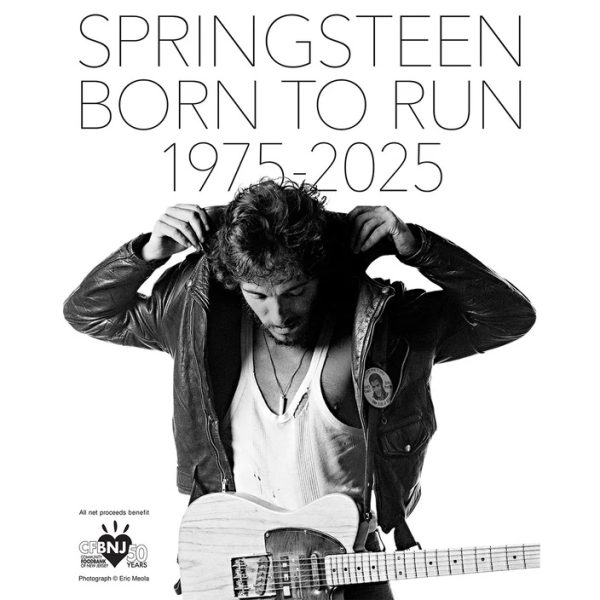
50th Anniversary of Born to Run
Born to Run is my all-time favorite album. Sure, there are days where I might answer Southeastern, because it’s more directly linked to me becoming a music writer (and because “Elephant” hits a wee bit too close to home). But Springsteen’s third record, now 50 (FIFTY!) years old, has been in my life younger (all but the first four years), and it’s the type of album that’s a milepost for people, even those who aren’t maniacal fans of The Boss (personally, I’d put myself in the category of Mild Fanatic). But why is it so special? Leading up to today, August 25, that’s what I’ve been trying to figure out.
My initial idea for paying tribute to Born to Run was to rank the songs on the record, similar to my list last summer for the 40th anniversary of Born in the U.S.A. (and think about that for a moment – Bruce released these two classic records a mere nine years apart, bookending Darkness on the Edge of Town, The River and Nebraska – that’s a five-album run that no one can touch). But trying to “rank” the songs on Born to Run is, quite frankly, silly. There are “only” eight of them, and they’re all essential to the story that Springsteen was telling. In Wings for Wheels, the documentary released as part of the album’s 30th anniversary, he tells us that the entire record takes place over “one long summer night.” So, kinda hard to say which song or two is “dispensable” – none of them are.
What I figured out, then, from listening and re-listening, re-watching the documentary, and starting in on Tonight in Jungleland: The Making of Born to Run, Peter Ames Carlin’s excellent history of the most important part of Springsteen’s musical life, is that some much of the appeal of, and affection for, Born to Run is about the age when you discover this album For me, 14 was about right. It was the summer after Born in the U.S.A. came out, which was really my first exposure to Bruce (I know – late bloomer). After devouring that album, it was time to discover more. I bought his first album on cassette – Greetings from Asbury Park, N.J. was, at the time…a lot. My brother (two years younger, oddly enough), had Born to Run (also on cassette – life was rough in the mid 80s), so I dove into that. I was knowledgeable enough to know that the music was much different – much denser – than the other Springsteen songs I knew, but it wasn’t until much later that I understood what the lyrics represented for me; something exactly like what Bruce was singing/shouting/howling about: getting out and finding something bigger. I also grew up in a small Northeast town (Upstate New York, so there were no beaches for us). There was nothing good, future-wise, in that mix of underpaid rural and dying industry. And I was, let’s say, not the most agreeable teenager. So, although I didn’t have dreams of racing cars and fronting a rock band, I knew my future didn’t lie among the admittedly beautiful hills of my hometown. That’s what Born to Run, for me and so many, represents.
“But,” you’ll say, “Springsteen has a lot of songs about growing up and getting out. Why THIS album?” That answer also occurred to me while watching the documentary – Born to Run, in many ways, was the end of Springsteen’s youth. Even the recording of the album, and fights with the suits at Columbia Records, were a nearly two-year slog. He knew this was make-or-break, so the still-youthful songs were colored by adult-decision making, including multiple personnel changes in his band – his people. Not long after the album was released, Springsteen sued his longtime manager (and, quite honestly, biggest advocate), Mike Appel. After that, recall the titles – and the tones – of his follow-up albums: Darkness on the Edge of Town. The River. Nebraska, for God’s sake! We didn’t know it at the time – neither did he, probably – but the door on Springteen’s youth slammed shut right around the time that Born to Run hit record store shelves, and songs about the often grim nature (and, occasionally, small triumphs) of adulthood followed. We hear those last vestiges of youth all throughout the album, from that screen door slamming and Mary’s dress waving/swaying (it’s waving) in “Thunder Road” to the unmet affection in “She’s The One” to the Magic Rat and the barefoot girl, the cops and poets of “Jungleland” (a song that, at well over nine minutes, feels even longer, because SO. MUCH. HAPPENS.). Those last few moments of youth disappear as the record runs out and the needle retreats. But, with each listen over the past half century, even if we’ll never shed those years, we can regain a little bit of that long-ago, summer night feeling – that hope for the future we once thought we might have – at least for 39 minutes.
To read our ranking of the 12 songs on Born in the U.S.A., go here: https://americanahighways.org/2024/06/03/born-in-the-u-s-a-ranked/
To listen to “Lonely Night in the Park,” a new release from the Born to Run sessions, go here: